

Why Gluten Free Sourdough?
Sourdough is all the craze, rightfully so. We’ve all grown a little tired of over-processed, under-nutritious, bland bread that kinda gets us all a little bit sick (or some of us a lot a bit sick). One of the advertised benefits of sourdough is it breaks down the gluten and makes it more digestible—some people with severe reactions to gluten don’t have those same yucky reactions with sourdough. Is that true?
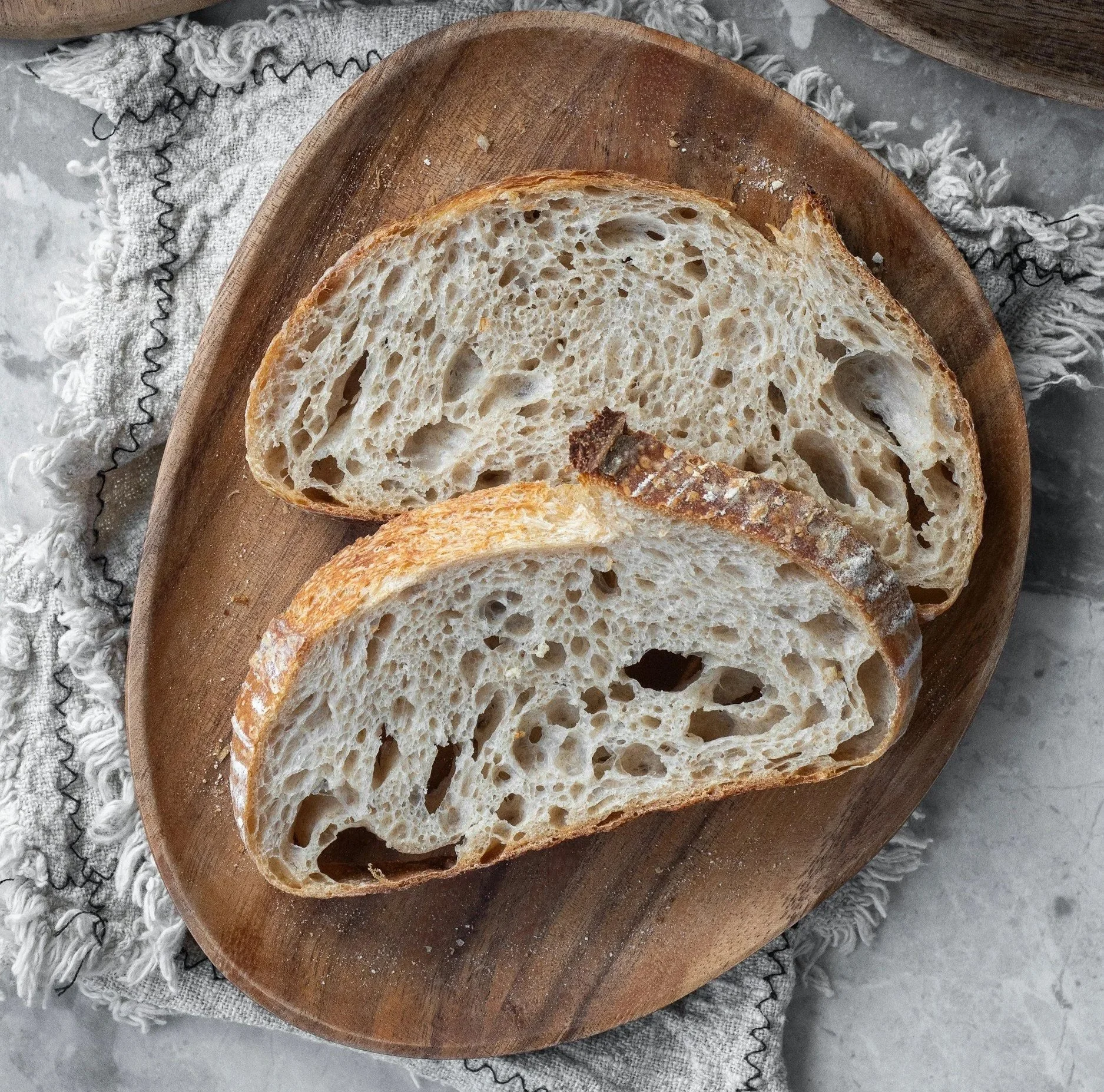
Gluten-based sourdough slices
It is true that fermentation breaks down the gluten, glucose, and other components of the dough. The good bacteria in fermentation does some of the work to digest it. Commercially made bread is made fluffy with high gluten and high aeration, like whipping cream, it gets its rise from air and gluten trapping it in. Sourdough works by the yeast and good bacteria digesting the flour and water and producing CO2 and lactic acid (hence the “sour” in sourdough). The gluten from the wheat stretches and traps some of that CO2 so you get the bubbles that allow the dough to rise.
But wait, I thought you said it doesn’t have as much gluten?
That’s true, it’s pre-digested gluten, but it’s still gluten. So someone with a severe gluten allergy/intolerance or Celiac disease still can’t safely eat it. It’s kind of like the difference between lactose free and dairy free—lactose free milk is not safe for those with dairy allergy because lactose milk doesn’t have the lactose sugar from dairy but still has the dairy protein. Sourdough has pre-digested gluten which can be easier on the stomach for most people, but it still contains the gluten protein and wheat, which is not safe for those who can’t have gluten or wheat at all.
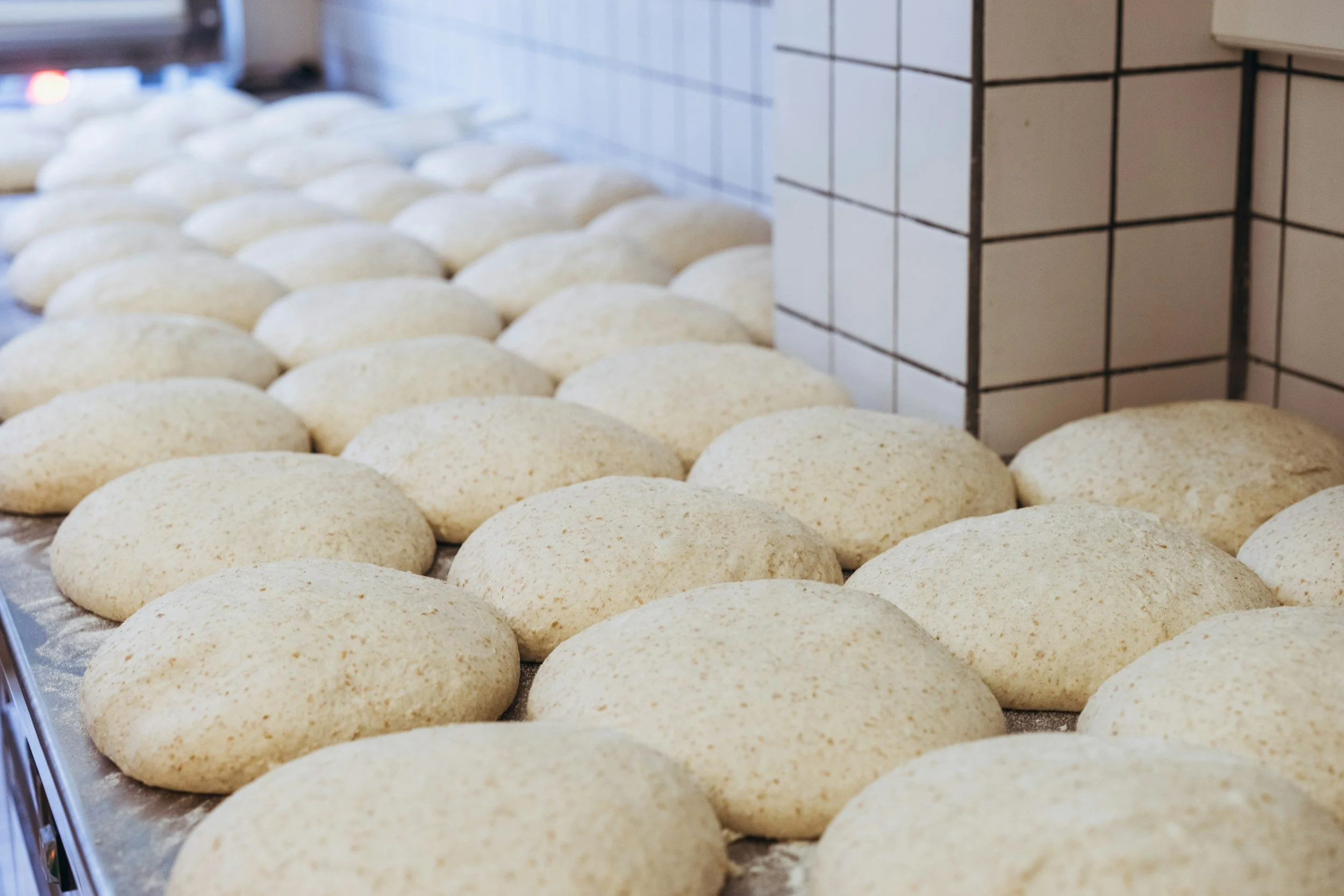
Dough bulk fermenting
That being said, fermentation in sourdough still has great benefits! It’s not all about cursing the machine and going back to slow, handmade bread. Fermentation processes can provide a much needed gut microbiome boost when done well. Gluten-free and wheat-free sourdough will never look exactly like gluten/wheat-based sourdough, gluten is a unique protein structure that is sticky and stretchy and gluten free flour is a delicate and complex mosaic of different starches and proteins to create a structure.
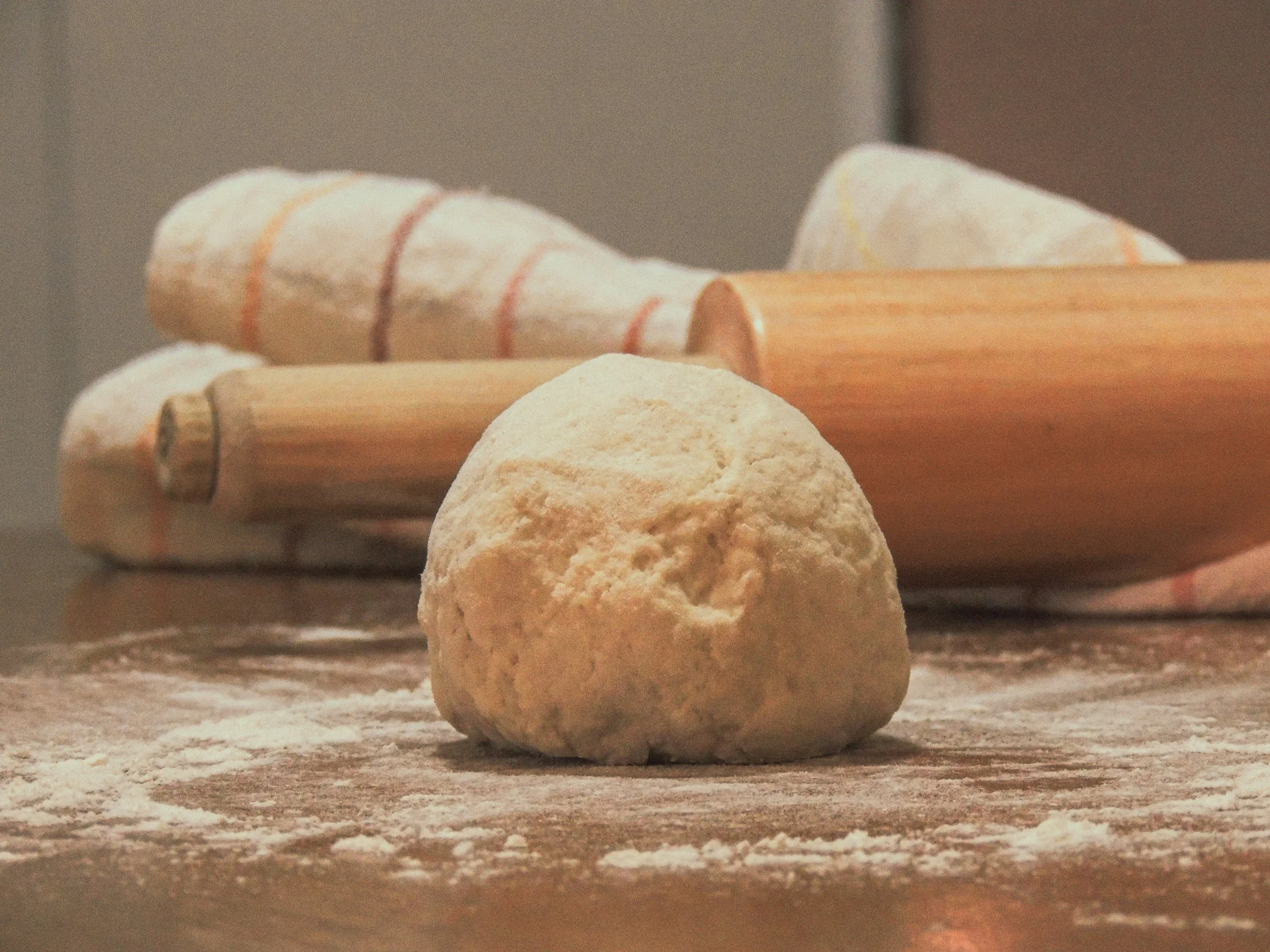
Lump of shaped dough
BUT, gluten-free sourdough tastes amazing compared to store bought gluten-free bread. You can have so much fun playing with flavors of flours, fermentation styles, starch/grain ratios, hydrations, and inclusions (which just means whether or not you add little extras into the dough like rosemary and garlic or green Chile). So take a stab at gluten free sourdough with your bread knife and enjoy!